Our Mission
The mission of Respect Scottish Sovereignty (RSS) is to explain and promote Decentralised Direct Democracy, the only governance system compatible with Popular Sovereignty. To that end, we are urging MSPs and the Scottish Administration to implement in full the UN International Covenant on Civil and Political Rights (ICCPR) into Scots law without further delay. ICCPR will give the Scottish People the ability to exercise their UN Human Rights to self-determination and direct political rights. ICCPR will not extend Holyrood’s power, but it will extend the power of the sovereign Scottish People.
Direct Democracy was recognised as an individual and inalienable Human Right by the UN in 1966 and ratified by the UK in 1976 – along with the democratic processes that make it work. We explore how Decentralised Direct Democracy (DDD) could shape a new governance model for Scotland, a consensual process involving Government & Parliament, the Regions & People, the latter having the final say.
Respect Scottish Sovereignty - The Story So Far
Respect Scottish Sovereignty was launched in late 2023 by Henry Ferguson, a dual national Swiss-UK citizen who has lived and worked in Switzerland since 1974.
Henry’s been voting in Swiss elections, initiatives and referendums since becoming a Swiss citizen in 1999 and, during the last 50 years, he’s become progressively familiar with – and fascinated by – the Swiss governance model of Popular Sovereignty (often referred to as Direct Democracy (DD)).
By virtue of the Claim of Right, Scotland is generally acknowledged as having exactly that same constitutional cornerstone of Popular Sovereignty and this has led Henry to launch Respect Scottish Sovereignty as a source of authoritative information for Scottish Citizens, MSPs & Political Parties, Local Authorities, and Civic Society.
There is one fundamental hypothesis underlying the accompanying materials – the Scottish People and their elected Representatives are (or at least should be…) partners in a collective venture. The governance framework described is based on the notion of popular consensus, as opposed to the current UK system of parliamentary conflict.
About the Author
Henry Ferguson was a dual national Swiss-UK who trained CA & ACMA in Glasgow in the early 1960s. Left Scotland in 1967 and subsequently worked 26 years with KPMG in Geneva and Paris as partner in charge of general audit and Swiss services to Government, MGOs and NGOs. Partner on the financial audits of the EFTA Secretariat in Geneva and Brussels and the EFTA Court in Luxembourg. Member of the KPMG Switzerland Board. After early retirement in 2000 he held several Non-Executive Director appointments in French Switzerland and taught Governance at Lausanne University-IDHEAP (Institute for Advanced Studies in Public Administration) and was an independent financial consultant. Member of the Steering Group of the Scottish National Congress during 2023 and currently, through RespectScottishSovereignty.scot, associate member of Independence Forum Scotland (IFS).
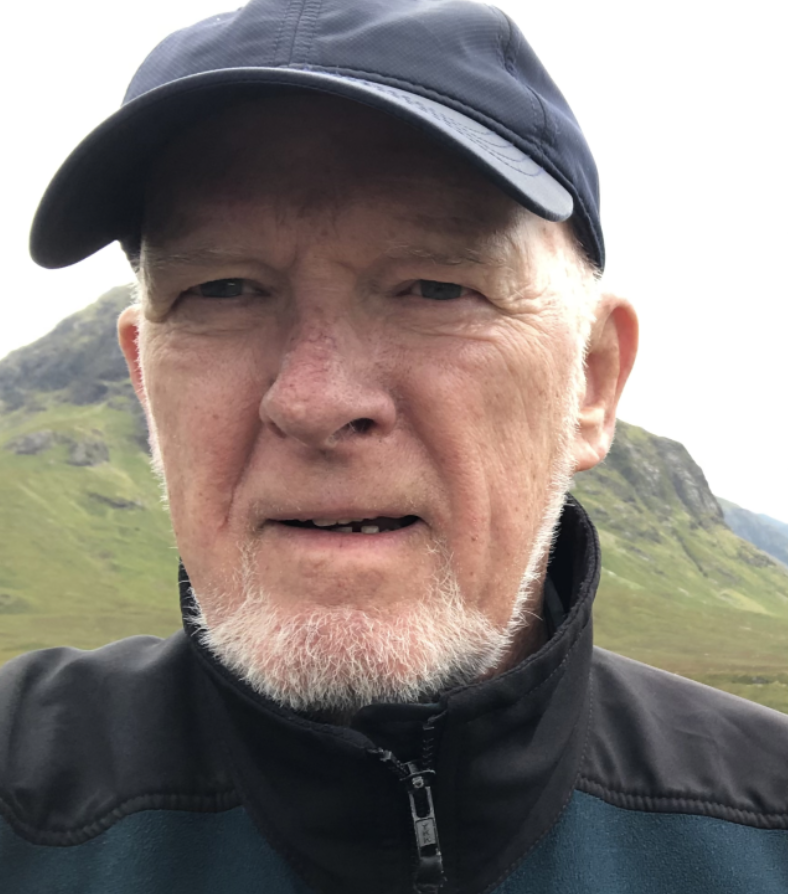
Henry Ferguson, our inspirational friend and co-convenor of Respect Scottish Sovereignty, died on Saturday the 15th of November, 2025 at his home in Sion, Switzerland.
Henry was born in 1943 in Uplawmoor in East Renfrewshire. He attended the Dollar Academy and afterwards trained as a CA in Glasgow. He moved to the Bahamas where he became the CFO of a Bahamian airline and met and married his Swiss wife. He lived in Switzerland for over 50 years and rose to become a partner in KPMG Switzerland.
Henry is survived by two brothers, a daughter, a son and five grandchildren.
Henry never lost his love for his native Scotland. In 2023, he became active in the Scottish independence movement from his home in Switzerland, traveling frequently to Scotland. Over the past two and half years, he single handedly educated people in the movement about the Swiss system of Direct Democracy where the People, not the parliament or government, have the ultimate authority.
Henry used this website, RespectScottishSovereignty.scot, to explain Direct Democracy in a Scottish context. He authored petition PE2135, calling on the Scottish Parliament to enact the UN International Covenant on Civil and Political Rights (ICCPR) into Scots law. The petition has collected nearly 7,500 signatures.
He knew that if implemented, ICCPR would give the Scottish People their right to self-determination and the direct political rights with which to exercise their sovereignty. The petition has helped Scots envision a future where they, not a distant Westminster government or its devolved cutout in Holyrood, control their destiny.
RSS will fight on for Scotland and its people, as Henry would want us to do.
Those who were fortunate enough to know Henry will greatly miss his kindness, brilliance and gentle humour. Scotland has lost a true patriot.